


Improve quality of infrastructures, services
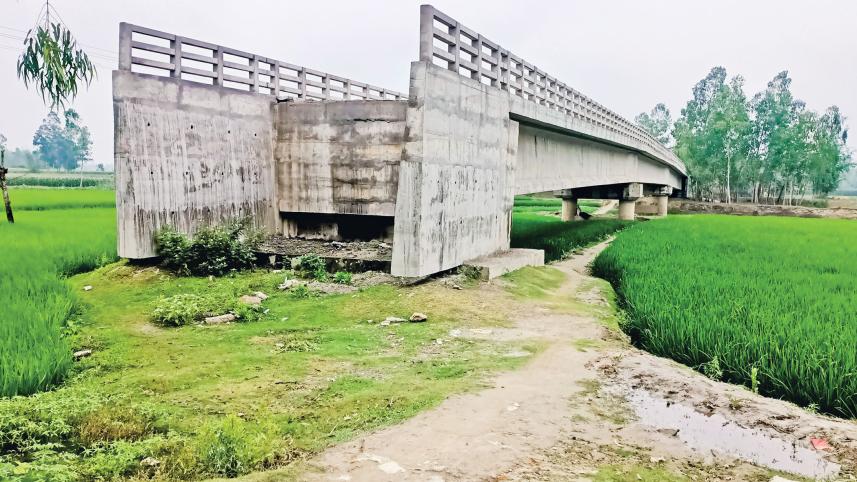
Bangladesh needs to improve the quality of infrastructures and services, raise the efficiency in the banking sector, train the workforce, lift competitiveness and ensure accountability in all spheres to advance to the next stage of economic development, economists said yesterday.
"In order to move to the next level of development, the workforce of the country has to be trained and their productivity has to be raised," said Prof Wahiduddin Mahmud, a former adviser to a caretaker government.
 For all latest news, follow The Daily Star's Google News channel.
 "Technological knowledge should be higher. If we continue sending people abroad without training them, poverty alleviation will not be possible."
The noted economist spoke at a book launching ceremony at the Hotel Amari organised by the Policy Research Institute (PRI) of Bangladesh.
The book -- The Odds Revisited—The Political Economy of Development o Bangladesh, authored by KAS Murshid, a former director general of the Bangladesh Institute of Development Studies (BIDS) – has been published by Cambridge University Press.
Prof Mahmud said the low efficiency in the banking sector is not supportive for the country to advance to the next level.
Accountability at institutions has not been ensured, so even if infrastructures have been built, the service and quality have not improved, he said.
"Now, accountability needs to be ensured at institutions."
Hossain Zillur Rahman, also a former adviser to a caretaker government, echoed Prof Mahmud.
"The government has built schools and hospitals but the quality of education and healthcare service remains a big challenge," said Rahman, also the executive chairman of the Power and Participation Research Centre.
"We also need to raise competitiveness to go to the next level of development."
He added that infrastructure played a major role in the development journey of Bangladesh though the quality of services is not good enough.
The book provides a detailed review of macro and sectoral developments over the past 50 years and new material and insights into the rise of Bangladesh's capitalist class, a socioeconomic perspective of the role of Dhaka-based urbanisation, and the rise of a new middle class.
Prof Mahmud said there was no single factor for the development of Bangladesh's economy.
"The government, the private sector, remitters and the agriculture sector all contributed to the economic success."
He described the garment sector as one of the major contributors to economic progress. "The garment sector has flourished with the help of policy support."
He said the government has played role in mechanising the agriculture sector but it received little acknowledgement.
According to Prof Mahmud, governments took stance on physical infrastructure and poverty alleviation to win acceptance among people. The economy has witnessed higher growth despite governance challenges.
The development of rural infrastructures has played an important role, so the government has done a commendable job by putting emphasis on infrastructure development, said Mashiur Rahman, economic adviser to the prime minister.
"Women empowerment also played a key role in the country's development and industrialisation has also made an important contribution."
Mashiur said some people always call for increasing subsidies but subsidies do not fast-track development all the time. Assessment-based development assistance can work best here.
A country's development may come through individual, collective and multi-sectoral action. But collective action is still low in Bangladesh, said Hossain Zillur.
"We need to find out how the collective action can be enhanced."
Ahsan H Mansur, executive director of the PRI, cited the private sector, including readymade garment factories, manpower export, and agriculture, as the main pillars of the economy.
"Social sector development has been a vital contributor. Development partners and non-government organisations played key roles."
The governments of the 1970s to 1980s were blamed for some of their policies. But their target to control the population and ensure food security was in the right direction, said Kazi Iqbal, a senior research fellow of the BIDS.
"If the target was not set and the plan was not executed, we would have hardly got to the development stage we are now today."
Zaidi Sattar, chairman of the PRI, also spoke.