


BTRC eases rules for mobile tower installation in border areas
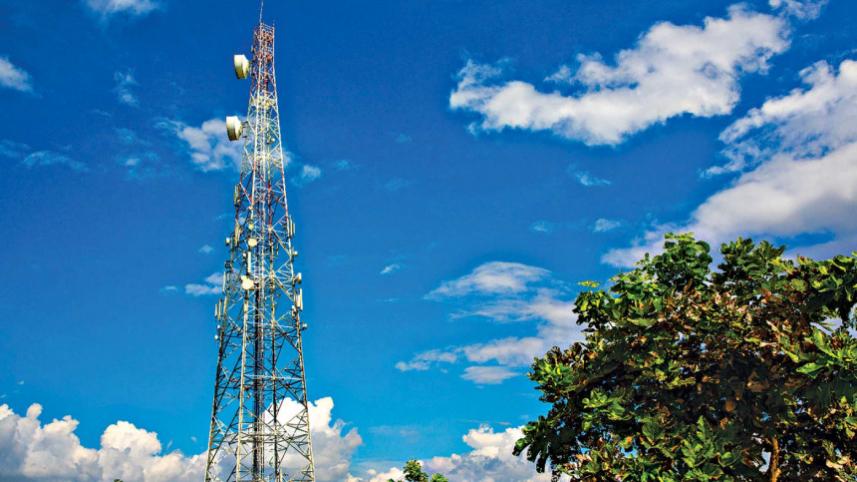
The Bangladesh Telecommunication Regulatory Commission (BTRC) has eased its policies for mobile tower installation in international border regions, eliminating the requirement for no-objection certificates (NOCs) from multiple security agencies.
The new directives aim to simplify processes and ensure uninterrupted telecommunication services in these areas. These updated guidelines replace the 2021 instructions concerning tower installation in border zones.
 For all latest news, follow The Daily Star's Google News channel.
 Under the new rules, mobile towers can now be set up within 0 to 3 kilometres of the international border -- excluding the districts of Rangamati, Khagrachhari, Bandarban, and Cox's Bazar -- following BTRC's verification of the submitted applications and documents by mobile operators.
BTRC will notify agencies such as Border Guard Bangladesh (BGB), the Directorate General of Forces Intelligence (DGFI), and the National Security Intelligence (NSI), but formal NOCs from these agencies will no longer be required.
For Rangamati, Khagrachhari, Bandarban, and Cox's Bazar districts, consultation with the Armed Forces Division (AFD) will still be necessary. The AFD is expected to provide feedback within 45 days. If no response is received within this period, it will be assumed there are no objections, allowing operators to proceed. Any subsequent guidance from security agencies must be implemented.
Towers planned for installation within 3 to 8 kilometres of the border require only DGFI notification, with no formal NOCs necessary. Operators must still follow any instructions issued later by security agencies.
According to industry experts, India's 2022 removal of restrictions on border tower installation and deployment of towers at the zero-line influenced Bangladesh's telecom operators to call for similar relaxations. They argued that seamless connectivity in border areas is essential for operational efficiency and user convenience.
Previously, many Bangladeshi citizens used Indian SIM cards for telecommunication and internet due to the hurdles operators faced in installing towers under older regulations.
Telecom operators have welcomed the updated policy as a positive step. However, they noted that the requirement to ensure network signals do not cross the border could result in higher call drop rates in some areas.
Shahed Alam, chief corporate and regulatory officer of Robi Axiata, praised the "Guidelines for BTS Installation in Bangladesh's International Border Areas-2025" as a groundbreaking initiative but also highlighted concerns. "While we appreciate this initiative, we had hoped for a more customer-centric approach, without overemphasis on technical parameters such as TA value or other indicators," he said.
He also suggested applying a uniform policy for BTS installation in Rangamati, Khagrachhari, Bandarban, and Cox's Bazar, similar to other districts. "Our neighbouring countries do not differentiate regulations between border and non-border areas for BTS installation. There is no requirement for special permissions or separate measures to control signals in such regions," he added.
Operators have urged BTRC to address these technical challenges to further enhance service quality in border areas.