


‘Like a morning after a nuclear attack’
24 March 2023, 18:00 PM
Historical
Fear of sexual harassment triggering child marriage: survey
20 February 2022, 18:00 PM
Historical

For the Love of Tea
7 January 2022, 18:00 PM
Historical
Court Corner / SC forms committee against sexual harassment
4 November 2021, 18:00 PM
Historical

UK-listed cybersecurity firm Avast in merger talks with NortonLifeLock
15 July 2021, 18:00 PM
Business

Change is the only constant
28 November 2019, 18:00 PM
Star Weekend
Media: Between a rock and a hard place
28 November 2019, 18:00 PM
Star Weekend

How new autocrats curb press freedom
28 November 2019, 18:00 PM
Star Weekend

(Uncertain) Future of Journalism in Bangladesh
28 November 2019, 18:00 PM
Star Weekend
“The space for in-depth critical journalism is shrinking"
28 November 2019, 18:00 PM
Star Weekend
Hustlers on the loose
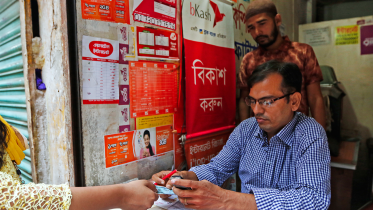
Thirty-eight-year-old Anisur Rahman had decided to send his sister BDT 10,000 through a bKash outlet on his way home from work. Eid was nearby and his sister needed some extra cash. Upon reaching the outlet, Anisur discovered that he was not the only one who urgently needed to transfer money. He was asked to write down his sister Jakia Sultana's account number and wait. A few minutes later, the agent informed Anisur that his money had been transferred and asked him to call Sultana to confirm.
7 September 2017, 18:00 PM
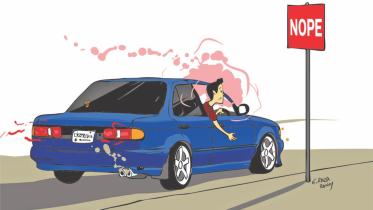
5 stages to traffic jam survival for non-ministers
Most of Bangladesh's cities are now suffering from acute mobility issues. Dhaka has cars and no roads. Thanks to rain, Chittagong has converted roads to waterways but with no boats. Sylhet is full of motorcycles that look like those horror scenes where a spider egg just burst.
7 September 2017, 18:00 PM
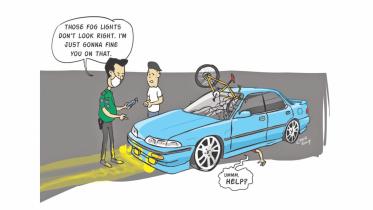
Enemies of traffic safety: Fog lights and fancy wheels
When you get a good thing, you don’t let it go. Unless of course you instantly find a better thing. A better thing is almost always greater than a good thing. This is great advice when it comes to choosing fish at the frozen food section. A fresh fish is a good thing. A fish that smiles and waves at you is fresher, hence a better thing.
31 August 2017, 18:00 PM

An unbearable loneliness
Haruki Murakami's 'Men Without Women'
31 August 2017, 18:00 PM
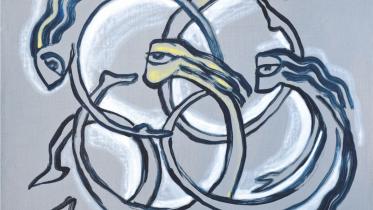
Ethically representing narratives of birangonas
An estimated 200,000-400,000 women and girls were raped by the Pakistani army and their local Bengali collaborators during the Liberation War of Bangladesh. Six days after the war ended on December 16, 1971, women raped during the war were designated birangonas, war heroines, in an effort by the fledgling Bangladeshi government to recognise and honour them.
31 August 2017, 18:00 PM
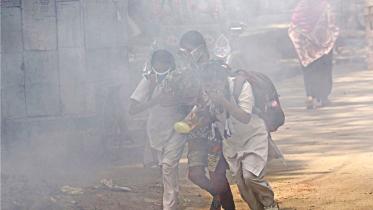
I deserve the blue
When 13-year-old Rafiul Islam Rabby was having trouble breathing, his mother Rabeya Begum didn't take it very seriously—not initially, at least. A week after, she noticed her son was coughing and wheezing throughout the night, unable to sleep. This time, Rabeya Begum took her son to the hospital.
31 August 2017, 18:00 PM
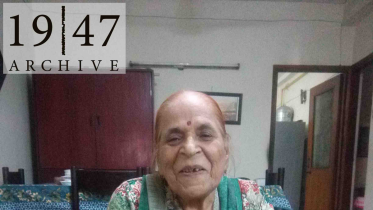
Pushpa Nangia
Pushpa Nangia was born in 1939 in Murree Hills, Rawalpindi. Her father was an engineer for the Military Engineering Services (MES) and her mother was homemaker. The Mukker family migrated from Nowshera to Delhi just a few days after the Partition, which also happened to be the day of Mrs Nangia's eighth birthday.
24 August 2017, 18:00 PM

Partition 1947: Do women have a country?
It was only the other day, some six decades after my mother's family left Pakistan, that I learnt about how they travelled to India in the aftermath of Partition.
24 August 2017, 18:00 PM
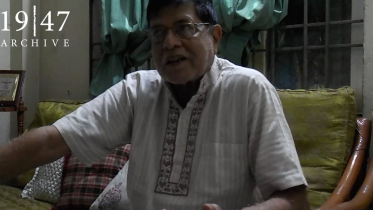
Mahammad Appu
A special train was arranged for Mr Appu's family and all of the workers in his father's factory to migrate from Lucknow.
24 August 2017, 18:00 PM
Partition 1947: The tears that still bind
Ten years ago I met Gazi in Bangladesh's Satkhira region, in a small island called Koikhali. He had come with his immediate family about 60 years back, at the stroke of midnight, with nothing but the clothes on his back.
24 August 2017, 18:00 PM
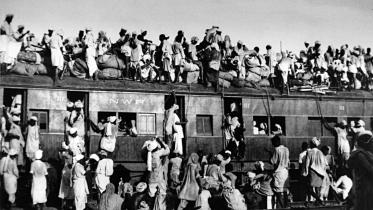
Partition 1947: Uprooted and divided
"It took me a long time to realise that my family and I, like every other citizen of the current state of Bangladesh, were directly and indirectly a by-product of the Partition to the extent that even our daily struggles sometimes evolved around it," writes Meghna Guhathakurta.
24 August 2017, 18:00 PM
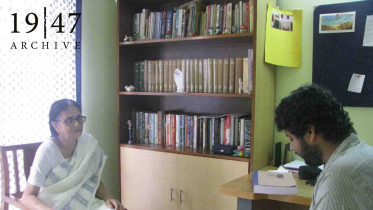
Manju Chakraborty
She says that when she visited Noakhali recently, she felt that both East and West Bengal are part of same culture. She would like to do away with the complex wires and visa system between two Bengals, she says.
24 August 2017, 18:00 PM
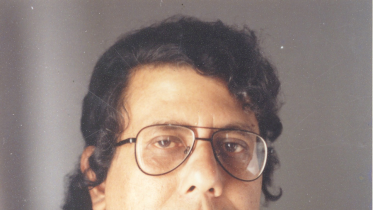
Rendering the great sense of loss of 1947 through film
In an interview with Star Weekend, Tanvir Mokammel talks about the significance of 1947 in his films, the role of artists in documenting history and the amnesia surrounding Partition among Bangladeshi filmmakers.
24 August 2017, 18:00 PM
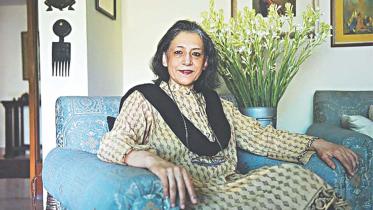
Separating a once historically indivisible people
"The partition of India was effectively the partition of the two main Muslim-majority provinces, Punjab and Bengal. There was nothing inevitable or pre-determined about this."
24 August 2017, 18:00 PM
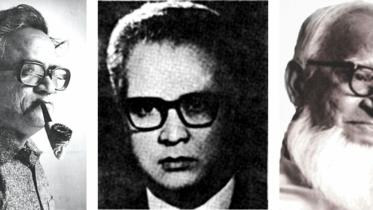
Partition and Bangladeshi literature
The Partition of the Indian subcontinent in 1947 has become indissolubly linked to horrific, haunting images of armed gangs or mobs attacking helpless groups of men, women and children trying to cross a border that had just been scratched on the map. Literature registers the shock in works that make harrowing reading.
24 August 2017, 18:00 PM

University of Dhaka and the partitioning of Bengal
A recent and a very good historian of Bengal, Nitish Sengupta has observed that [in the mid-19th century] 'Nowhere else in the subcontinent were Muslims as worse off in Bengal, just as, paradoxically, few other communities derived as much benefit from British rule as the Bengali Hindus'.
24 August 2017, 18:00 PM
How communal politics ruined agrarian society
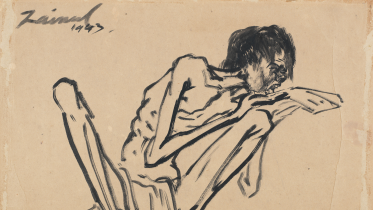
First, when it came to the ecological question, the two-nation theory, on which the partition was claimed to be based, was muted as seen in Punjab and Bengal where the question of partitioning the water bodies took the centre stage. Second, the immediate aftermath of the partition left thousands of people dead and millions homeless and filled with gruesome trauma.
24 August 2017, 18:00 PM
Akhilananda Dutta
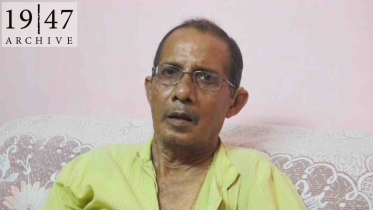
Akhilananda Dutta comes from a family of doctors. Born in Dhaka in 1942 to a doctor and a housewife, he recalls that most of their family members were doctors at that time.
24 August 2017, 18:00 PM
Ali lmam Majumder
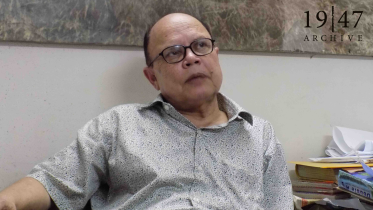
Ali Imam Majumder was born in the village of Kalabari, Tripura in 1950. His maternal home was in Sylhet. His family had a great deal of land in the village and its surroundings.
24 August 2017, 18:00 PM
Partition 1947: How a nationalist movement turned communal
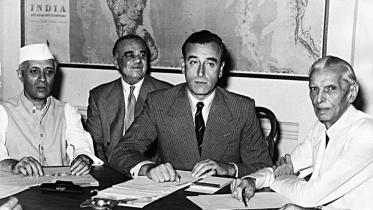
Who is to blame for the 1947 Partition of India and the large-scale violence that it triggered? There are accusations and recriminations.
24 August 2017, 18:00 PM