


Her return to the mortal abode
Prayer to the Goddess
This year she gets in touch with the goddess mother, Devi Durga; feminine supremacy upon the universe. She is awed by her beauty and a tale of faith emerges. She wholeheartedly awaits the gracious mother to descend from her heavenly abode showering the world with peace and harmony.
[gallery id="1467619"][/gallery]
 For all latest news, follow The Daily Star's Google News channel.
 Divine Simplicity
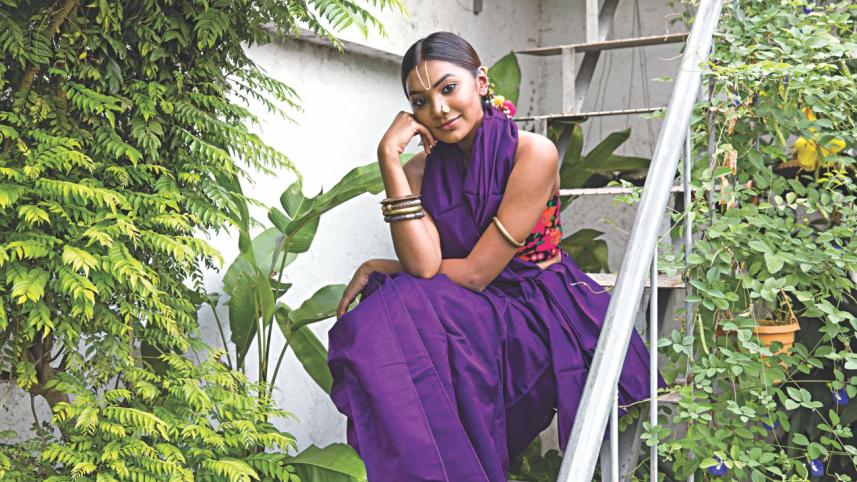
With ivory toned Jasmine tucked in her quintessential 'khopa', she appeared celestial. Her beauty reflecting minimalism and with an aura of simplicity; she kept herself busy speculating the marvels of the divine. Covered in silver trinkets and a red bindi she was all that Durga reminds us of.
Ode to the goddess
Puja is a time when you pledge yourself to the glory of the Hindu gods; a time dedicated to spiritual devotion and cultural exclusivity. This is a time when you are at your cultural best; approximating the traditions and norms set by society.
So, does it mean you have to wear the expensive silk saris in a combination of red and white paired with lots of gold ornaments? Not necessarily!
* The following looks can be imitated to bring on a devout fervour but with a twist. Get hold of some cotton 'thaan kapor' – single hued, 5-9 yard-long piece of fabric, in any colour of preference and drape it as a sari.
* The colours selected for the base of the sari can range from magnificent magentas and bold purples to mild beige or regal whites.
* The sari can be worn a little above the ankle in the Nivi drape style.
* To be slightly different, one can opt for different draping methods besides the traditional Bengali style.
* Instead of the typical bindi, you can experiment with a tilak in sandalwood or vermillion.
* Men and women can both look attractive with the Baishnab tilaks on their forehead.
* Seasonal flowers can be used as ornaments instead of the heavy chunks of expensive jewellery.
* Silver ornaments are very much the 'IN' factor now; they look best with any sort of traditional attire.
* Nose rings, studs, septum rings, conch earrings, clip-ons, toe rings and armlets look exceptionally well with the Indian subcontinent ethnic look.
* Hair can be tied in a top knot, bun or even let loose depending on comfort and style preference.
* Considering the humidity in the air; makeup needs to be minimal but fresh – a BB cream can help in hiding out all the minor imperfections.
* Shoes are not allowed inside temples; impressive stilettos should be the last thing on anyone's mind!
* Considering comfort, stylish flats matching the saris and wedges are the best option for the ladies.
* Men can always go for sandals and 'nagras' to match their dhotis, jeans and cotton kurtas.
By: Fashion Police
Photo: Sazzad Ibne Sayed
Model: Sunerah
Make-up: Farzana Shakil's
Makeover Salon
Wardrobe and Jewellery: LS Desk
Blouse: Jahin Khan
Styling: Sonia Yeasmin Isha