


Are you what you wear?
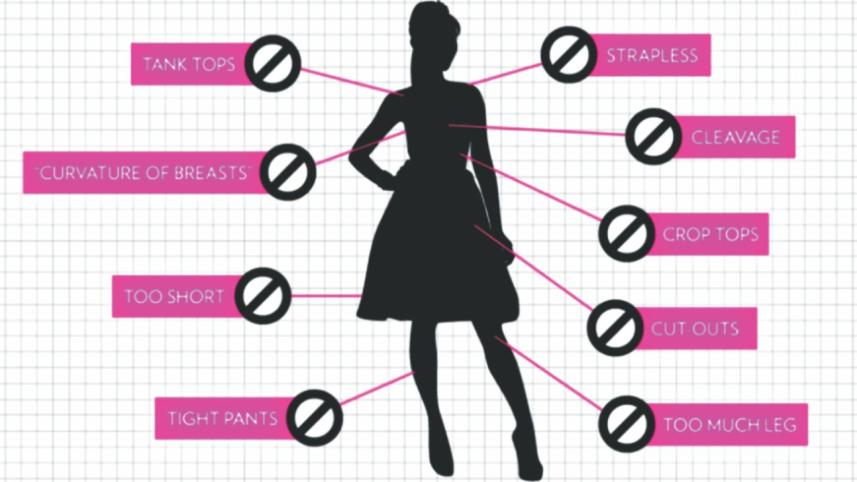
We've all heard or read the term 'slut-shaming' at one point or another. The term itself is used to stigmatise women for their sex lives, as if we have any right to judge them at all. After all, if it's not our body, it shouldn't really be our business. Unfortunately, that term is also used to criticise women for what they wear, as if to imply that the more skin someone shows, the more willing they are to sleep around.
If a woman's skirt is too short: slut! If the neckline of her blouse is too low: slut! If she shows too much skin: slut! You might think that, being in Bangladesh, we are exempt from this sort of name-calling, but alas that is far from the truth. Replace mini skirts and low-cut tops with backless sari blouses and sheer kameezes, and naysayers will apply the same logic.
 For all latest news, follow The Daily Star's Google News channel.
 No matter how old you are, if what you are wearing does not conform to the ideals of a stranger who you will probably never interact with in real life, you will be branded as a slut and your integrity - or apparent lack thereof - will be questioned.
There are many facets to this issue and it is not as black and white as some people might think. Consider the impact of throwing the word 'slut' around in front of young people. Are we really teaching a generation of children that it is okay to judge people based on what they wear, and that it is okay to make assumptions about their whole lives if you have only seen a minuscule snippet of it?
Whether someone is actually promiscuous or not is a different story, but to suggest that they might be just because they are wearing something sleeveless or something that shows a bit of leg is preposterous. The fashion industry is ever-changing, and gone are the days of ultra-conservative apparel. With the influx of designer houses and boutiques, we now have an array of options for our clothing that is bigger than ever before.
We can be more adventurous with our designs when we take them to the tailor - perhaps a sari blouse with a keyhole back or a halter-neck, with embellishments that sparkle through that sheer sari that you simply had to buy for the wedding season. If you've got the figure for it, if it's something you're comfortable wearing, then wear it.
We need to teach our children to be comfortable in their own skin without worrying about other people, because someone will inevitably have something to say and there's no escaping that.
If gossiping was an Olympic sport, Bangladesh would win gold and silver. How many of you have argued with your parents about your outfit, and how many times have you heard "but what will people say?"
People will say a lot of things. People have the power to completely destroy someone's self-worth and confidence with their words. People can and will question the way your parents raised you just because they prefer their girls to wear full-sleeved clothes whereas you are happy to wear sleeveless.
If you feel comfortable in a georgette sari, and if it accentuates your figure instead of making you look frumpy, you should go for it. Choosing to wear that does not mean you are inviting men to ogle at you. It does not mean that you're asking for it - to be stared at, groped, or worse. It means that you have chosen an item of clothing that you like, that suits you, and you are wearing it because it makes you look good. It should be as simple as that.
This is not to say that if you are comfortable in a strapless top and denim shorts, you should wear it. To be asked to wear an orna or something that provides moderate coverage when going out and about is not a form of oppression, because, as open-minded as we think we are, this is still a conservative country - and there isn't anything inherently wrong with that.
What you wear when you go out should reflect and respect the customs of the place you are in, but even if you choose to disregard that and wear revealing clothing, you do not deserve to be slut-shamed.
So, repeat after me: what someone wears does not make them a slut.
By Zahrah Haider