


Innovate, take risks to reach out-of-school children
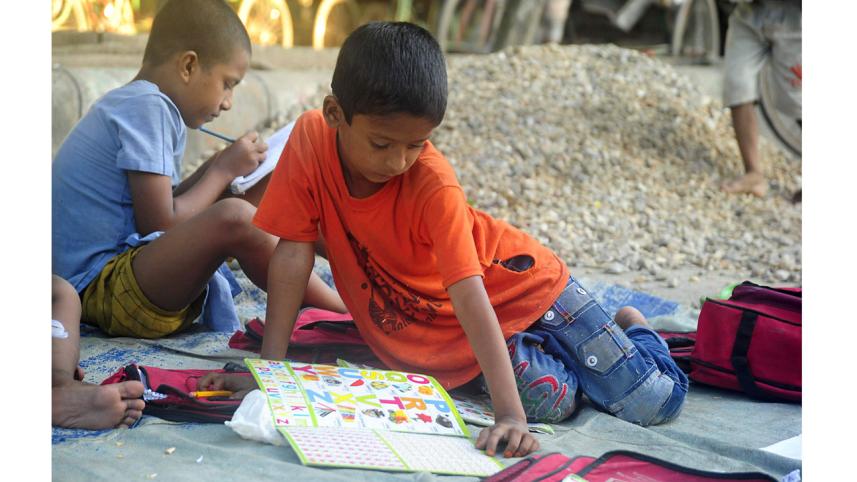
There are 16.7 million out-of-school children in the Asia-Pacific region and they come from some of the region's – and the world's – most marginalised communities.
They are girls living in parts of the region where gender disparities are rife, such as in South and West Asia where 80 percent of out-of-school girls are unlikely to ever attend school. They are children with disabilities and those who are HIV-infected. They live in remote, impoverished areas where school is a long, dangerous journey away or is simply not available. They are migrants, nomadic people and racial, ethnic and linguistic minorities.
 For all latest news, follow The Daily Star's Google News channel.
 They are a disparate group who despite numbering in the millions are too often without a voice. Debates over how to change this and how best to address their needs have been going on for decades – the 1960 Karachi Plan, for example, was focused on extending education's reach in Asia, for example.
The Education for All era of 2000-2015 represented the most unified global push to date to extend the benefits of learning to all people, and tremendous progress was made, such as a surge in universal primary education in this region.
However, we cannot deny that for millions in this region, quality education remains as elusive now as it did 50 years ago. We are left with unfinished business and the realisation that we cannot continue as we have in the past.
How do we move forward when it seems that our systems are stuck in perpetual stasis?
The answer is we take risks. We innovate, we include and we have the potential to impact the lives of millions of learners in the Asia-Pacific region.
Last year's adoption of the Agenda for Sustainable Development, and particularly Sustainable Development Goal 4 on education, and the regional Incheon Declaration on Education 2030, means that we have the regional and international commitments we need to make this happen.
The momentum is on our side and the opportunity to innovate to empower our region's out-of-school children is within our reach.
This past week, the Asia Education Summit on Flexible Strategies for Out-Of-School Children was held in Bangkok to spotlight innovative, flexible approaches to education that can seize on that momentum.
More than 560 development workers, government officials, education practitioners, and private sector representatives from throughout the continent gathered for the summit. Their approaches varied but they were united in their belief that successes in addressing the needs of out-of-school children will not come out of the torpor of where we have been, but from the dynamic possibilities of where we can go if we take fresh approaches.
Flexibility in education means learning that is adaptable to the needs of the student. Key in this is abandoning the notion that our out-of-school children can be served just by formal schooling systems. We need approaches to education that are open in terms of admission and age requirements, mode, duration, pace and place, and we need to scale up models that have proven effective. Moreover, we need to ensure that for those currently out of school, second chance education does not mean second class education.
Innovations discussed at the summit spanned multiple fields, from innovative approaches to financing education, through changes to taxation systems to ICT-based approaches that use technology to bring in a wealth of online educational resources to areas out of traditional education's reach.
The importance of mother tongue-based multilingual education in a child's early years of schooling was also stressed at the summit. A study released last week by UNESCO's Global Education Monitoring Report shows that 40 percent of people worldwide do not have access to education in a language they understand, a situation that only compounds the challenges facing minority language learners in our region.
Better data on the backgrounds and barriers facing out-of-school children is essential and to that end, UNICEF and the UNESCO Institute for Statistics (UIS) have partnered in the Global Out-of-School Children initiative.
The need to reach out-of-school children is not merely a moral or humanitarian imperative. The fact is that educating our children is the best possible investment we can make in our region's future – and what might seem like a well-trod cliché is, in fact, borne out by hard numbers.
As a recent study noted, if primary enrolment patterns in Southeast Asia do not change, the unskilled workforce that emerges will cost countries billions of dollars. The socioeconomic implications of this in terms of higher levels of poverty and disease and increased risk of conflict cannot be contained within any one country's borders. In an age of increased mobility between countries and regions, the need to provide quality education to out-of-school children is a transnational priority.
Our focus now is not on the years that have passed but on how we can invest more in education for out-of-school children, take risks to get children to re-enter schools and introduce innovative learning methods. Action now can positively transform the lives of our children – and the future of our societies.
The writers are the Director of UNESCO Bangkok, and Regional Director of UNICEF, South Asia.