


The lights are turning red
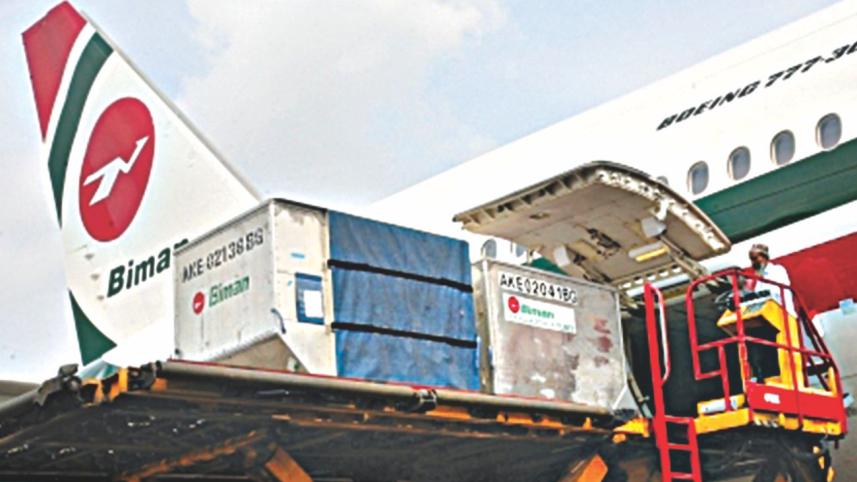
AUSTRALIA. United Kingdom. Germany. One can relate Australia with the UK for all the history behind them, and even the UK with Germany (thanks to the recent Brexit fiasco), but the only way how all three of them have something in common, brings Bangladesh into the picture – all three of them have effectively banned direct air cargo going into their countries from Bangladesh explicitly attributing security concerns.
The land down under put the ban on all air cargo from Bangladesh with effect from 19 December 2015 citing lack of required security at Bangladesh airports, later relaxed on 5 May 2016 to allow the cargo from Bangladesh to go to Australia only after re-screening of the cargo at approved transit airports immediately before entering Australia. The incumbent Minister saw this as a "result of overall improvement of cargo security at Hazrat Shahjalal Intl Airport" (The Daily Star, 10 May 2016). The "improvement" the Minister was referring to was to do with the appointment of a much-coveted consulting organisation, apparently referred to by the UK authorities, to improve the aviation security in Bangladesh airports and primarily at Dhaka. Read on.
 For all latest news, follow The Daily Star's Google News channel.
 In early-March 2016, the United Kingdom slapped on a ban on direct air cargo between Bangladesh and the UK, also citing security concerns, which saw much uproar because it directly hurt the interests of Biman Bangladesh Airlines which was the only direct operator of flights carrying cargo between Dhaka and London. Amidst a much-hyped pretext over this ban and its supposedly colossal financial consequences, the UK-based firm, Redline Assured Security was awarded a near-10 million dollar contract as swiftly as 20 March, 2016. Having no time left to express my opinion through the press, I posted an article on 21 March 2016 on LinkedIn titled 'Are we the fools rushing in?' through which I had essentially tried to say that in order to mitigate the security concerns that have been raised by Australia and the UK, we only needed to combine the professional knowledge and expertise that is already available within the country, which would not only be enough to tell us how existing security loopholes could be plugged, but more importantly how we could foster to bring about the culture change, professionally speaking.
This culture change at professional level is what I believe is badly needed in Bangladesh in order to meet the exceedingly demanding security and safety standards in the world of aviation today. The incident that took place on 7 June 2016 delaying the arrival of the Prime Minister's flight and endangering a dozen other commercial flights was due the very fact that the people responsible to follow standard procedures to inspect the runway after any aborted takeoff were conveniently gone shopping for Iftar. The airport authority who were responsible to ensure that their people were on the job only jumped into action with investigation committees et al after the lapse was detected by the Special Security Forces who found the debris (left behind from the aircraft of the aborted Biman flight) lying on the runway when the Prime Minister's arrival was imminent.
Meanwhile, on 5 May 2016 the Hazrat Shahjalal Intl Airport at Dhaka reportedly achieved the Regulated Agent (RA3) status under the EU regulations which the Minister himself was reported as saying to have temporarily allowed three airlines including Lufthansa to operate their cargo flights from Dhaka to the UK (bdnews24.com, 9 May, 2016). Now, it is an open secret worldwide that the EU's RA3 validation (for airports) or ACC3 validation (for carriers) have often been achieved by many airports and carriers who had adopted dubious means to hide their inabilities and influenced the auditing agents to overlook what they stashed under the carpet, figuratively speaking.
The latest restriction imposed by the LBA (Luftfahrt-Bundesamt, the German authority for civil aviation) therefore comes as a shocking one. According to LBA, with effect from 24 June 2016 all mail and cargo originating from Bangladesh shall be deemed as High Risk Cargo and Mail (HRCM) as defined under the EU regulations, and must be subjected to additional screening requirements as defined under Chapters 6.7 and 6.8 of the Annex to Regulation (EU) No. 185/2010. In reality, this requirement for additional screening of all cargo and mail is effectively a ban on Bangladesh because the airport does not have nearly the level of skills and resources required to meet the additional screening standards – the very reason why AeroLogic (a joint venture between Lufthansa and DHL), the only direct air operator between Bangladesh and Germany, has suspended their operations to Dhaka since this restriction was imposed by the LBA.
The question therefore is, given that we have appointed a specialized UK-based security consulting agency for almost 10 million dollars who were touted to have made significant progress since their appointment in March and credited with helping Hazrat Shahjalal Intl Airport achieve the RA3 status, how come the intelligence information received by the German authorities have led them to impose this restriction which has arisen out of their severe concern for lack of security?
I have been voicing my opinion since March that in response to the bans from Australia and the UK, our authorities could have resorted to seek opinions and recommendations from the professionals in Bangladesh itself, many of whom have extensive experience from having worked for numerous international airline operators and who could help address the paradigm change required in work culture more than anything else. Only if our authorities had shown their faith on local expertise and gave attention to adhering to standards set forth in Annex 17 (Security) of the International Civil Aviation Organization (ICAO), those changes themselves could have been significant enough to begin to demonstrate proper aviation security measures being in place. Instead, being in the hands of hardly-accountable expertise bought for millions of dollars, we seem to be going at a direction where the lights are turning red on the way, one after another.
The writer is a Doctor of Philosophy in Aviation from Embry-Riddle Aeronautical University (ERAU) and previously worked on projects with The Boeing Company and the Federal Aviation Administration (FAA).