


Pakistan unlikely to hurry in recognising Taliban
Pakistan may not hurry to recognise the Taliban as new rulers of Afghanistan this time and wait for regional powers like China, Russia and Iran to make their decisions, a prominent expert on regional security and terrorism issues said.
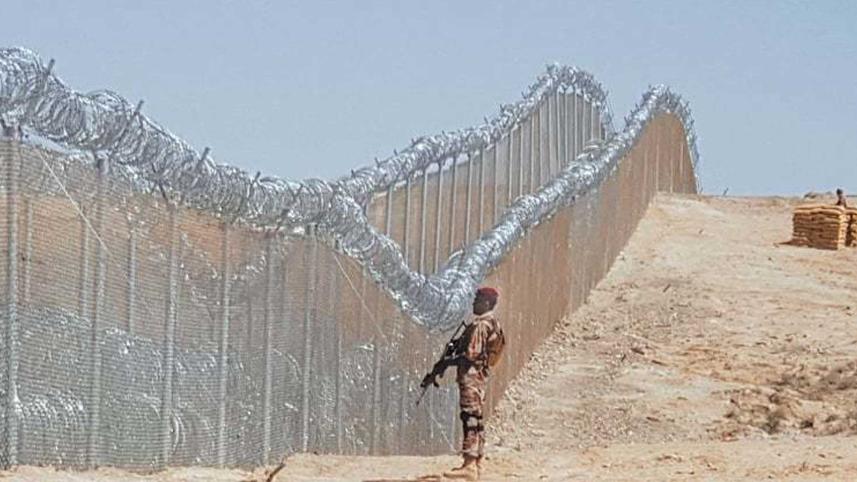
Zahid Hussain, also a Dawn columnist, said what is happening in Afghanistan has direct consequences for Pakistan as the two countries share a 2,500 km long porous border and the same people living across the lines.
 For all latest news, follow The Daily Star's Google News channel.
 Only three nations—Pakistan, the United Arab Emirates and Saudi Arabia—recognised the previous Taliban regime which imposed an ultra-austere interpretation of Islam in Afghanistan.
"Pakistan is not overtly happy, but the changes are seen as positive for the country. There are huge apprehensions too as a radical Islamic party like Taliban have taken control across the border," Zahid told a webinar arranged by Asia News Network on Thursday.
What happened in the last 11 days in Afghanistan has taken everyone by surprise. Even the Taliban seem to be unprepared for the quick outcome of the offensive and the complete collapse of the Western-backed Afghani government, he said.
Though Pakistan has been working with US on its war against terror, the two countries have divergent goals in Afghanistan.
"On one hand, Pakistan is a partner of US in its war against terror, on the other it has very good relationship with Taliban leadership. In fact, most of the Taliban leadership who fled Afghanistan after 2001, managed sanctuary in Pakistan and from there they carried on their resistance against the occupying force," he said.
He said the recent events in Afghanistan pose a few challenges for Pakistan.
Pakistan supported the Taliban whole-heartedly in the 1990s but the situation has changed dramatically in the last 20 years. Pakistan has its own right-wing political parties and militancy problems and the Taliban takeover of Afghanistan will surely boost them, he said.
Militant groups, including Tehrik-i-Taliban Pakistan (TTP) alternatively referred to as the Pakistani Taliban, have long been operating their activities mostly from across the border.
As the Taliban has given commitment to Pakistan and also to the international community not to allow any militant or terror groups to operate from Afghanistan, Islamabad has enough reasons to be hopeful about solving the cross-border militancy problem, he added.
"But the situation is really tricky. TTP had actually pledged allegiance to Mullah Omar, the founder of Taliban in Afghanistan. Their objectives might differ but their world-views are the same. Only time can tell if the Taliban can actually keep their promises on this issue."
Secondly, Pakistan is worried about a possible refugee influx through its porous 2500-km-long border with Afghanistan. The country already hosts around 3 million Afghan refugees and further addition of refugees will be a problem, he said.
"There is huge apprehension that the change in Afghanistan will have a huge impact on regional geo-politics," he said adding that US, China, Russia, and Iran all have huge stakes here.
"One can hope that this region would not become a playground for world powers again," he said.