


Why should we care about inequality?
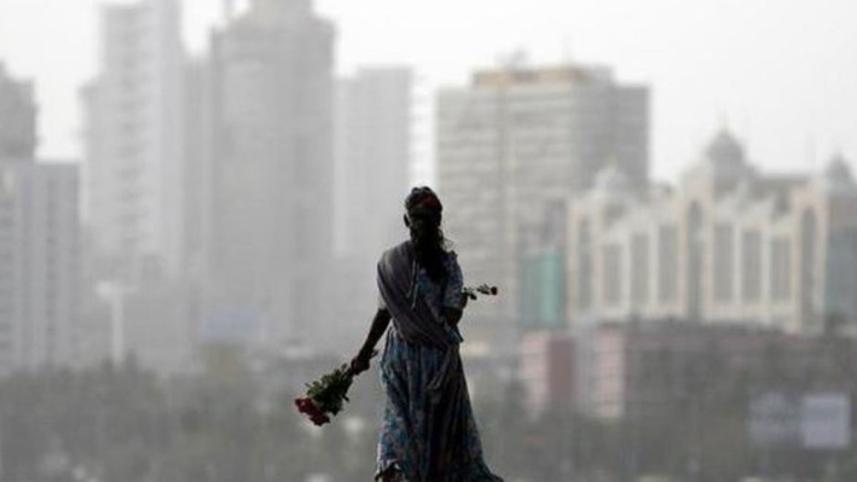
Inequality is now one of the top global issues as it poses a major threat to economic growth and social crisis. The United Nations Department of Economic and Social Affairs (UNDESA) shows in its World Social Report 2020 how much income inequality has increased in many developed countries, and in some middle-income and developing economies. The report finds that income and wealth are increasingly concentrated in the hands of the top one percent. It shows that technological innovation, climate change, urbanisation and international migration are the reasons for this inequality. The coronavirus crisis is only worsening the poverty and inequality within and among the societies. It is hurting school-going children and affecting more the students of underdeveloped and developing countries that do not have the opportunity for virtual learning. During the pandemic, people who work in low-pay sectors are suffering more than those working in high-pay sectors. For example, the educated and high-paid employees can carry on their work from home but low-paid workers like the garment workers and individuals engaged with small and medium-sized enterprises are hit the hardest.
Why should we care about inequality? Some argue that we should focus on poverty reduction—not inequality. A model by the economist Simon Kuznets, known as a Kuznets curve, is a significant model used for this argument. Kuznets argues that inequality is an undeniable result of the early stages of economic growth and it will reduce eventually as growth advances with an increase of per capita income. So he suggests focusing on growth and poverty reduction. But many studies find that economic growth does not help to reduce inequality until the government takes special measures. There are powerful arguments in support of why inequality requires urgent policy attention.
 For all latest news, follow The Daily Star's Google News channel.
 Firstly, a society that has higher inequality tends to have more internal conflicts and destabilisation of social cohesion. It is because when inequalities continue through the generations, the excluded people tend to contest the progress that has bypassed them. Francis Fukuyama shows in his research paper titled "the Latin American Experience (2008)" that inequality delegitimises the political system as people fight for their shares. Professor Richard G. Wilkinson also shows in an article on the impact of inequality, published in Social Research Journal in 2006, that the rate of homicide is consistently higher in societies where income differences are greater. The Global Trend 2030 also finds that the growing inequality in Africa will intensify the tribal and ethnic conflicts.
Secondly, higher income inequality is an obstacle to poverty reduction. Poor people have fewer chances of getting their share of the development pie where inequality is high. Economists Roy van der Weide and Branko Milanovic found in a study on the impact of overall inequality that high inequality has a positive impact on economic growth, however, it benefits mostly the rich group of a society. They also argue that economic growth in a highly unequal society further increases the gap between the rich and the poor. Thomas Piketty in his book Capital in the Twenty-First Century also argues that the return on capital is always higher than economic growth which makes richer those who have the capital and poorer those who don't have it. Poorer people also suffer more where the market mechanism is weaker, because a poor person will not have a loan if he or she cannot satisfy the lender without a guarantee. So, lack of income limits their investment in business, health, and children's education. Thus the poor experience the vicious circle of poverty.
Thirdly, income inequality traps can trigger an increase in intergenerational inequality and hinder social mobility. Inequality traps describe a situation where the total income distribution is stable due to the different dimensions of inequality (social, economic, political, and cultural) that interact to defend the richest group from downward mobility and to inhibit the poor from moving upward. Economist Vijayendra Rao argues that in a patriarchal society, women are not given an equal share of property and have to confront restriction of movement. Besides, the girls are often not sent to school, and women are less likely to work outside. So, this social system keeps women dependent on men and keeps them remaining in an inequality trap. Like the example of women and girls in a patriarchal society, the unequal distribution of power enables the rich to have a good policy in their favour and to keep their social status, Vijayendra Rao argues. In an unequal society, a poor family faces difficulty in providing uninterrupted schooling for their children, which then prevents the latter from getting a higher-income job and changing their social status.
Fourthly, inequality is a matter of concern when it comes to achieving the Sustainable Development Goals (SDGs). The United Nations Sustainable Development Goal 10 is about the reduction of global inequality. The goal has a target to attain and sustain income growth of the bottom 40 percent of a population at a higher rate than the country's national average by 2030. Inequality is also an important determinant to attain the aim of zero extreme poverty by 2030. A World Bank study finds that poverty rate will fall to below 3 percent if the income of the bottom 40 percent of a population increases by 2 percent faster than the national average, but the poverty rate will remain at 10 percent if the income of the bottom 40 percent grows at below 2 percentage points of average national income.
So to achieve a good democratic system, stable political and social structure, as well as sustainable growth, we need to reduce inequality. Initiatives have been taken to address the issue but these have proved to be mostly unsuccessful. Moreover, the coronavirus crisis has worsened the situation by impeding the present actions of reducing poverty and it will pull back the households that have crossed the poverty line. More social policies and actions are needed to reduce inequality. The UNDESA suggests in its report that promotion of equal access to opportunities, inclusive fiscal policies that benefit employment and disability, and legislation that tackles prejudice and discrimination and promotes greater participation of marginalised groups are necessary to minimise income inequality. An anti-poverty group, Global Citizen, together with a research agency, Glocalities, have done a poll in 25 countries during this pandemic and found that eight out of 10 people think billionaires should come forward during this crisis to end poverty and inequality. Oxfam showed in a report that the world's richest eight billionaires are as wealthy as half of the world's population. Oxfam finds that if an additional 0.5 percent tax could be imposed on the wealth of the richest 1 percent billionaires over the next 10 years, it would be equal to investments needed to create 117 million jobs in education and healthcare sectors. The bottom line is: a global concerted effort and a burden-sharing attitude are required to fight against poverty and inequality.
Rajib Tripura is a foreign affairs analyst and a graduate from Crawford School of Public Policy, the Australian National University.