


Reminiscence: The match I did not witness
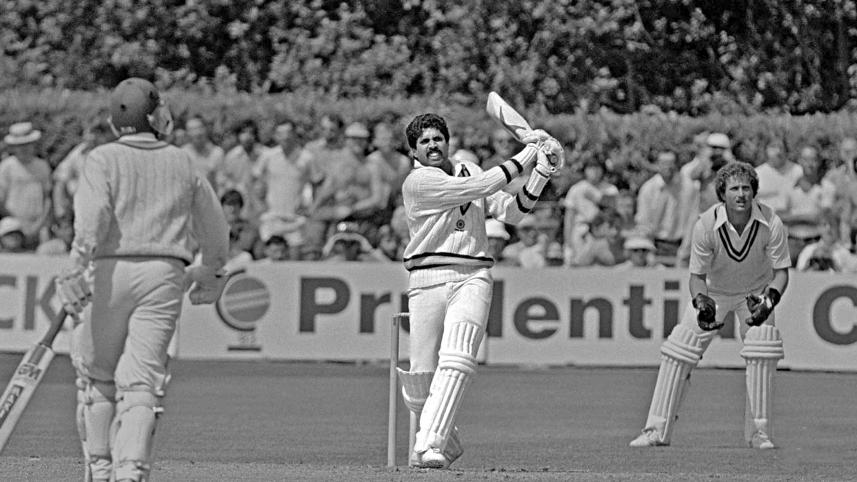
With our first bit of coronavirus-induced sports nostalgia – each of us recounting our first live match experiences – out of the way, let's flip to the other side of the coin. Sports fandom is built as much upon first-hand experiences as it is tapping into folklore, sampling stories and events that were before our times, and getting caught up in the drama and romanticism seen through the most vivid lens – the mind's eye. This current round of reminiscence calls upon those at The Daily Star Sport and beyond to revisit sports stories that they have only heard or read about, and left the rest up to their imaginations. One small rule: no looking up of scorecards – just recounting from memory.
 For all latest news, follow The Daily Star's Google News channel.
 Nine for four. 17 for five. 266 for nine. 129-run last-wicket partnership. Do-or-die, the captain steps up with 175 not out. All these figures, except the first two and the last, may be woefully wide of the actual.
It is an obvious one because those who turned up at Tunbridge Wells that day were the only ones to have seen perhaps the most important innings in history. As far as I can tell, the BBC was covering a concurrent match elsewhere, so there were no video cameras at Kent to capture the action.
What I know is gleaned from Idols, a book written by Sunil Gavaskar in the 1980s that, ridiculously now it seems, bracketed non-Test players like Rajinder Goel and Padmakar Shivalkar with the likes of Garry Sobers, Viv Richards, Dennis Lillee, Imran Khan, Ian Botham, Richard Hadlee and Kapil Dev. A bit of the rest is from Kapil Dev's autobiography Cricket My Style.
It was the summer of 1983. India were outsiders. Rank. They were supposed to be bundled out of the tournament. They were abject in the 1975 and 1979 world cups, having failed to win a single match. On this day in Kent, the 'dull dogs' of ODI cricket were on the brink of exit -- Test babes Zimbabwe could well have been statistically proven to be a superior team.
In a must-win match, they had India four wickets down on nine runs. One of the bowlers who wreaked early havoc on a green pitch was Kevin Curran; the name of the other seamer has by now escaped memory.
At nine for four, out strode that outlandishly gifted individual: captain Kapil Dev. In the remembered words of Gavaskar: he knocked it about for a while. Gavaskar recalled how everyone was nervous in the dressing room, because Kapil had a reputation for going hell for leather when backed against the wall. But that summer's day, where the show was reserved only for the eyes of those present, was different.
As partners kept deserting him, he moved past his century. This was a 60-over match -- that was the format for the first three World Cups. Before the innings ended, there was a lunch break. At any rate, the players went in before the innings ended, and captain Kapil was fuming -- Gavaskar thought the ire was caused by the ineptitude of the top-order batsmen. By the time Kapil came into the dressing room, however, he found it empty with only a glass of cold water on the table.
As he said in his autobiography, he took that as the team asking him to cool down. If he did, it was not evident in what followed. He hammered the very bowlers that caused his teammates so much trouble and with Kirmani, took the score past competitive to a winning one. In the process he overtook Glenn Turner's 164 and his eventual 175 not out was the then highest score in ODIs.
It remains his only century in ODIs. But it changed the world. That was the spark that ignited India's march to an astonishing World Cup triumph, beating the mighty West Indies in the final. India's cricket market boomed and the path was set for India to become the predominant superpowers of world cricket that it is today.
It may have been against lowly Zimbabwe, but the circumstances under which the innings was played and the impact it continues to have makes it the most seminal knock in limited-overs cricket – at least in my mind's eye.