


Ruman Sana: From Khulna to Tokyo Olympics
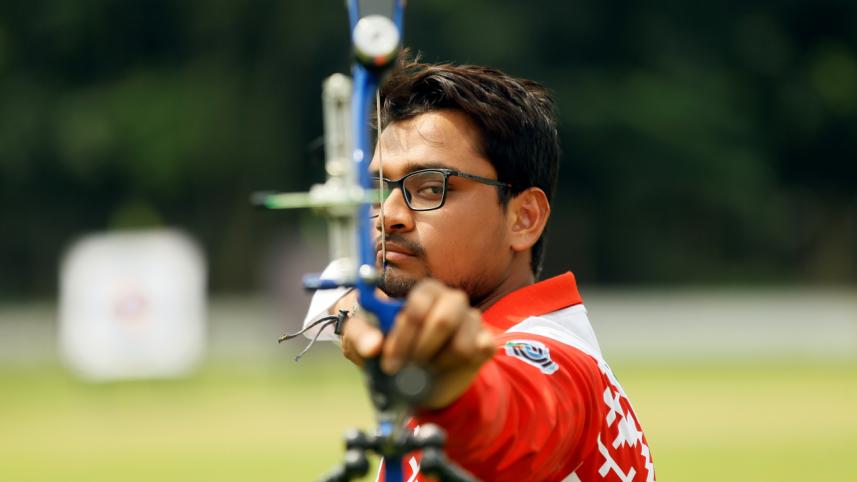
TDS: Tell us about your introduction to archery and your initial years.
RS: The Bangladesh Archery Federation ran a week-long talent-hunt program in Khulna in 2008, when I was a student of Class-IX. I participated in that program, which was under coach Sajjad Hossain, and I got selected. Then I had a one-month training at BKSP in Dhaka and became first in selection after convincing my parents, who did not initially allow me to stay away from them.
 For all latest news, follow The Daily Star's Google News channel.
 I first participated in the national archery championship in 2010 and in an international tournament in 2011 before a motorbike accident in 2012 kept me away from archery for nearly a year.
Bangladesh Ansar Coach Babul Mia brought me to Dhaka and trained me in Shafipur Ansar camp during a time when I was too weak to walk. That was my second coming in archery. I emerged champion in the Bangladesh Games in 2013 with a national record of 327 points in the recurve bow qualification round.
TDS: Were you involved with any other sport before trying your luck in archery?
RS: I played football and cricket regularly. I was more interested in sports than studying. I even went on hunting birds with a slingshot. I think the experience of slingshots helped me hit the targets in archery.
TDS: What were the reasons for your parents not allowing you to play archery initially?
RS: I’m the youngest of three siblings in my family. My father works at an export-oriented shrimp business in Khulna, so there are financial constraints. However, they tried their best to help me grow as an archer when I chose to play it. They provided a small amount of money when I went aboard but questioned whether the expenditure was worth it. I told them to be patient.
TDS: Do you support your family financially now?
RS: I got a contract job [Tk 5000 per month] in Bangladesh Ansar in 2013 and the job was made permanent in 2014 with a Tk 15,000 salary per month apart from other facilities such as ration, pocket-money for travelling, cash-award for winning medals etc. After winning gold medals in both individual and team events in Bangladesh Games, I got some cash-award of around Tk 80 thousand and I handed it over to my father. That amount was spent for my mother’s surgery.
TDS: You have always worried about your post-athlete career. Has the worry eased yet?
RS: I am still worried because I could not continue my studies after the HSC exams for the sake of archery. So, I could not earn the educational qualification to get a good job. However, if I concentrated on studies, I would not have earned a quota place in Tokyo Olympics. We are bringing laurels and building a positive image for the country, but we don’t get the return from the nation. This thought is often frustrating.
TDS: What are your suggestions about it?
RS: Sportsmen never dream of becoming millionaires. Our dream is of a secured future after our career ends because we are giving our best time for sports and the country. To be honest, the junior archers get frustrated when they see I’m not getting any big rewards.
I think the government should take initiatives to find a way to ensure a secured life for athletes by taking our international success into consideration. The government may also tag corporate houses with each discipline. I think athletes like me can perform better at the international stage if they are personally sponsored by corporate houses.
TDS: What personal improvement have you made under Frederick?
RS: First of all, Frederick made me physically strong and helped me improve technically. We train and exercise six days a week. I have improved two basic things -- bowhunting and follow through -- and that’s why I could score a career-best 681 out of 720.
TDS: How is Frederick different from others coaches who worked here before?
RS: Fredrick is a great motivator with a friendly approach. We can’t say ‘no’ to him for anything. He is really keen to improve the performance of the archers. I had also trained under different Korean coaches, who taught us the same basic skills. But Fredrick is different; he understands the psychology of each archer perfectly. He works accordingly and tries to improve, keeping the archers’ basics the same. He also found me a sponsor, which makes archery accessories.
TDS: Is your qualification round’s score good enough to produce any medals in the Olympics?
RS: 681 is my career-best score in qualification. From now on, my target will be to score 690-plus because nearly 10 archers in the world can score 690-plus in competition and I want to put my name in that list.
TDS: You stunned some of the world’s top archers in Netherlands over three days. How did you make it?
RS: Initially I could not perform well in the first phase of the qualification round. Then I decided to come back to my own shooting and I scored 343 out of 360 in the second phase of the qualification round. Since then, I tried to keep my own shooting to the last day. Every archer has a secret shot and if he finds it on the day, he can overcome everything.
TDS: Archery is called a mental game. How strong is Ruman Sana mentally?
RS: Mental strength is a mix of concentration, experience and confidence and it depends on how frequently you are taking part in world-class tournaments. When you play in world-class tournaments, you get to compete against the world’s top archers regularly. After Frederick’s appointment, we played two World Cups which we could not do in last 10 years. If we participate in big tournaments regularly, we will be able to fight against them without any fear or pressure. You can say I am now mentally stronger than before.
TDS: Is your current mental strength enough to do well in the Tokyo Olympics?
RS: To be honest, there is no end to earning experience. My personal thought is if I can take part in all international tournaments before the Tokyo Olympics, I can produce something good. I will take part in a Test archery competition at the same venue in Japan where the Olympics will take place. So I will have the experience and the mental strength.
TDS: Bangladesh, a country with a population of 17 crore, have not won a single Olympic medal yet. Can the nation hope Ruman will bring an end to this medal-drought?
RS: I can’t say that I will win a medal in the Olympics but I can say that we are close to the target. Olympic medallists work really hard and I think we will have to take ourselves to that level first. Before achieving something in Olympics, I will prepare myself through hard work. If I can score 680-plus points regularly, then I will start believing that I can win an Olympic medal.
TDS: Is Rumna Sana satisfied with his 10-year career?
RS: I’m happy because I never thought I could earn a quota place in the Olympics. It was a dream-come-true for me to win a bronze medal in the World Archery Championships. My hard work had finally paid off. Allah showed me the path and I believe he will help us fill the void of an Olympic medal.